
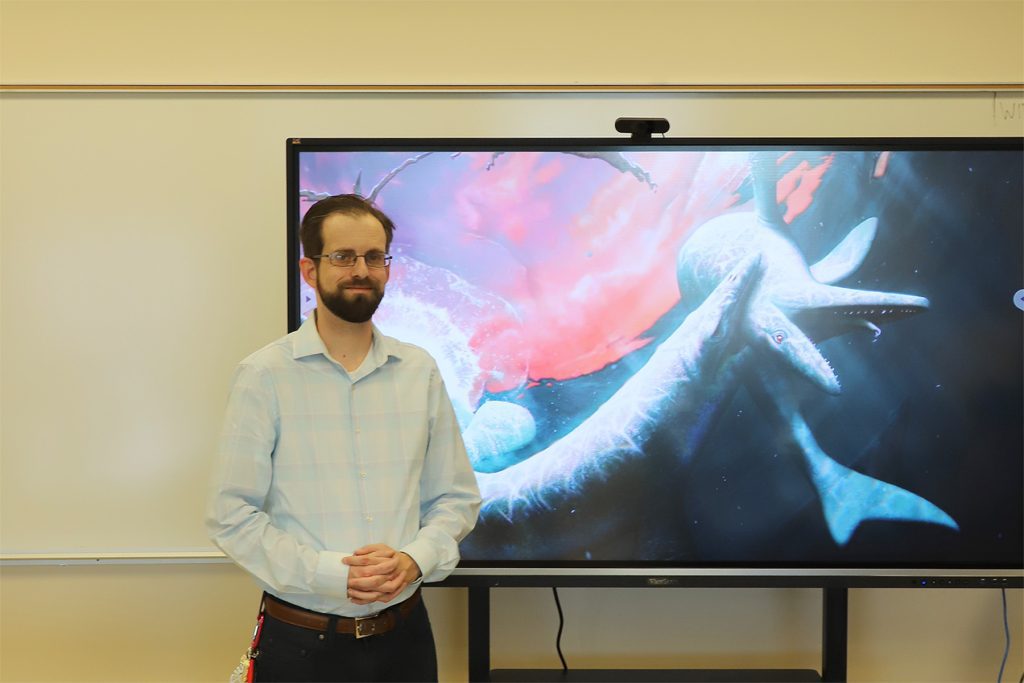
MOOREFIELD, W.Va. — A scientific study led by Eastern West Virginia Community and Technical College science faculty member Nathan Van Vranken has found evidence that mosasaurs — large marine reptiles from the age of dinosaurs — lived in freshwater environments in what is now North Dakota about 66 million years ago.
© Henry Sharpe
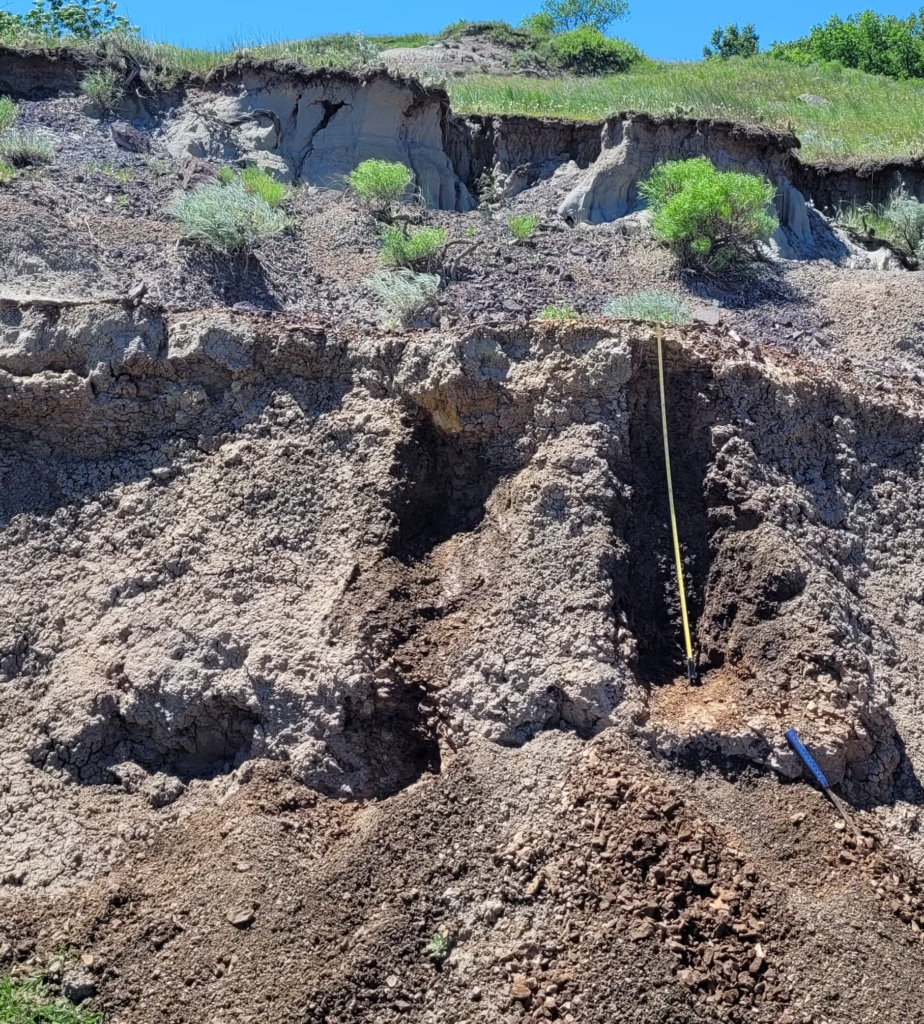
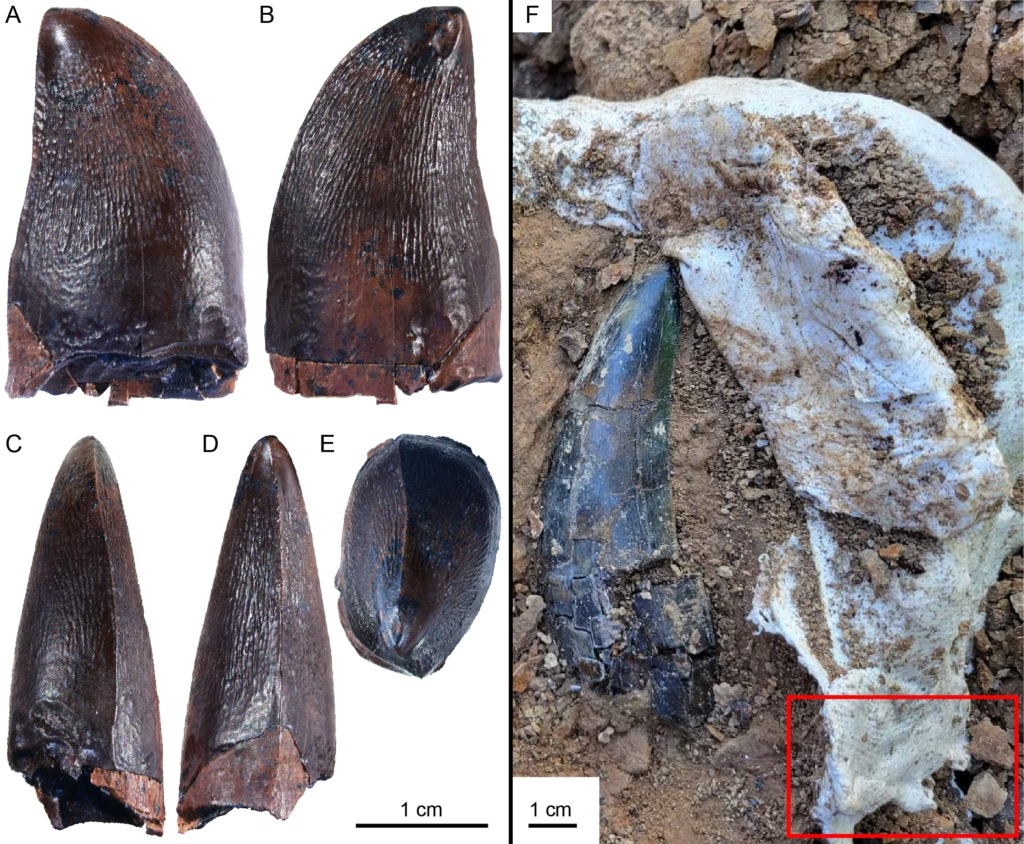
The research is based on a mosasaur tooth discovered in a river deposit alongside fossils of Tyrannosaurus rex, Edmontosaurus and a freshwater crocodylian. The unusual mix of marine and terrestrial animals preserved in the same deposit raised questions about how a mosasaur fossil came to rest in a freshwater setting.
To investigate, researchers analyzed the tooth using geochemical isotope testing and anatomical comparisons. The study was led by Van Vranken of Eastern and Dr. Melanie During of Vrije Universiteit Amsterdam. Results showed the chemical composition of the tooth enamel matched freshwater conditions rather than a marine environment.
Multiple fossils support freshwater habitation
Two additional mosasaur teeth from nearby North Dakota sites were also analyzed and showed similar freshwater chemical signatures. Each fossil was sampled only once to preserve it for display. Together, the findings indicate mosasaurs were not accidental or short-term visitors to freshwater systems but lived in these environments for extended periods.
Researchers believe this shift was linked to environmental changes in the Western Interior Seaway, a vast inland sea that once divided North America. Over time, increased freshwater input reduced salinity, gradually transforming parts of the seaway into brackish and freshwater systems.
Large predators adapted to changing environments
Based on tooth size, the mosasaur is estimated to have reached lengths of up to about 11 meters, according to earlier research by Van Vranken and Dr. Clint Boyd of the North Dakota Geological Survey. The fossil belongs to a group known as prognathodontine mosasaurs, which are believed to have been powerful predators capable of hunting large aquatic prey.
The findings show mosasaurs adapted to major environmental changes and expanded beyond strictly marine habitats. Similar adaptations are seen in modern animals such as river dolphins and estuarine crocodiles, which occupy freshwater or mixed-salinity environments despite marine ancestry.
The study will be published in a Springer open-access special volume, Bringing Fossils Back to Life. The article, titled “King of the Riverside”, a multi-proxy approach offers a new perspective on mosasaurs before their extinction | BMC Zoology.
For more information about this research or science programs at Eastern West Virginia Community and Technical College, contact Van Vranken at nathan.vanvranken@easternwv.edu.
Categories: